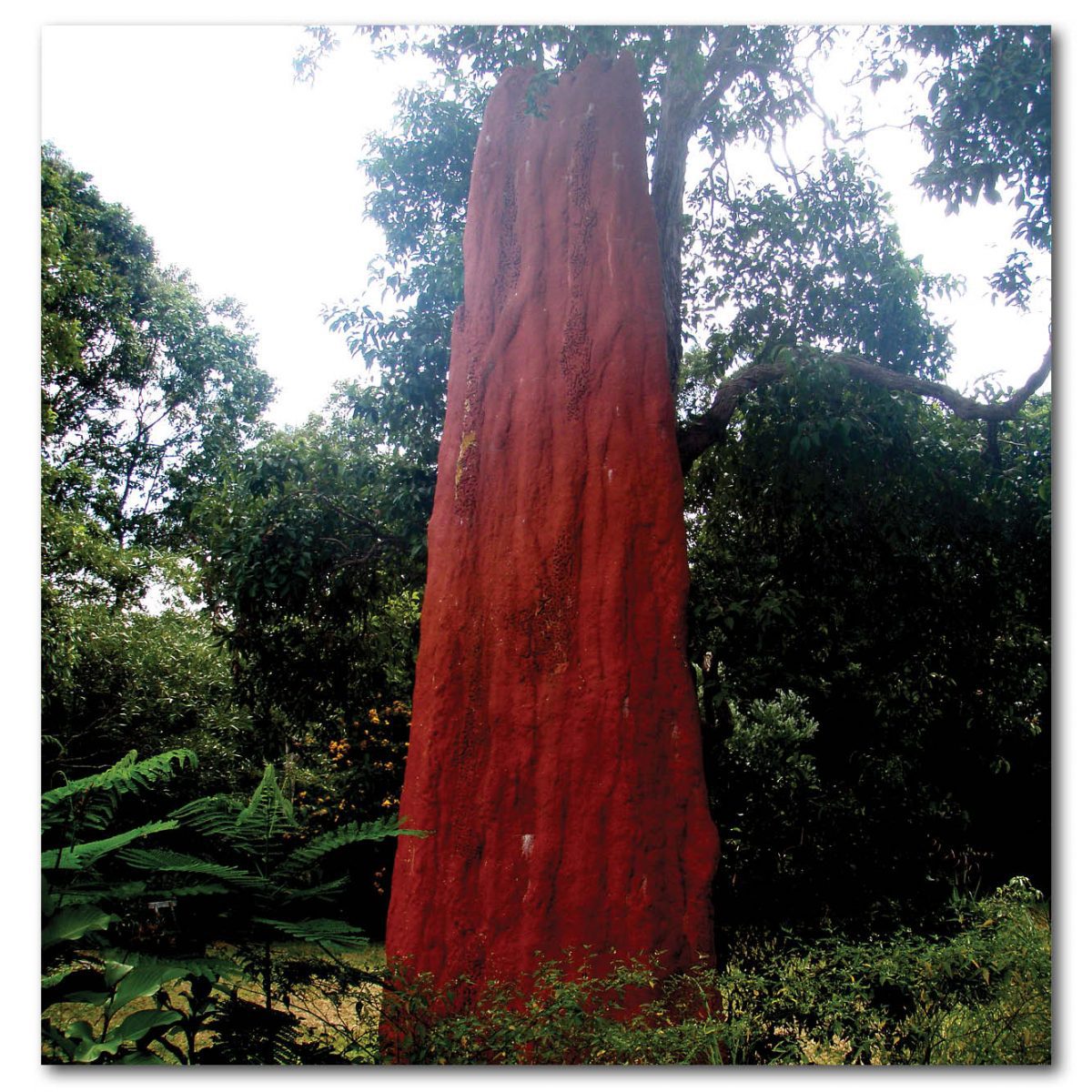
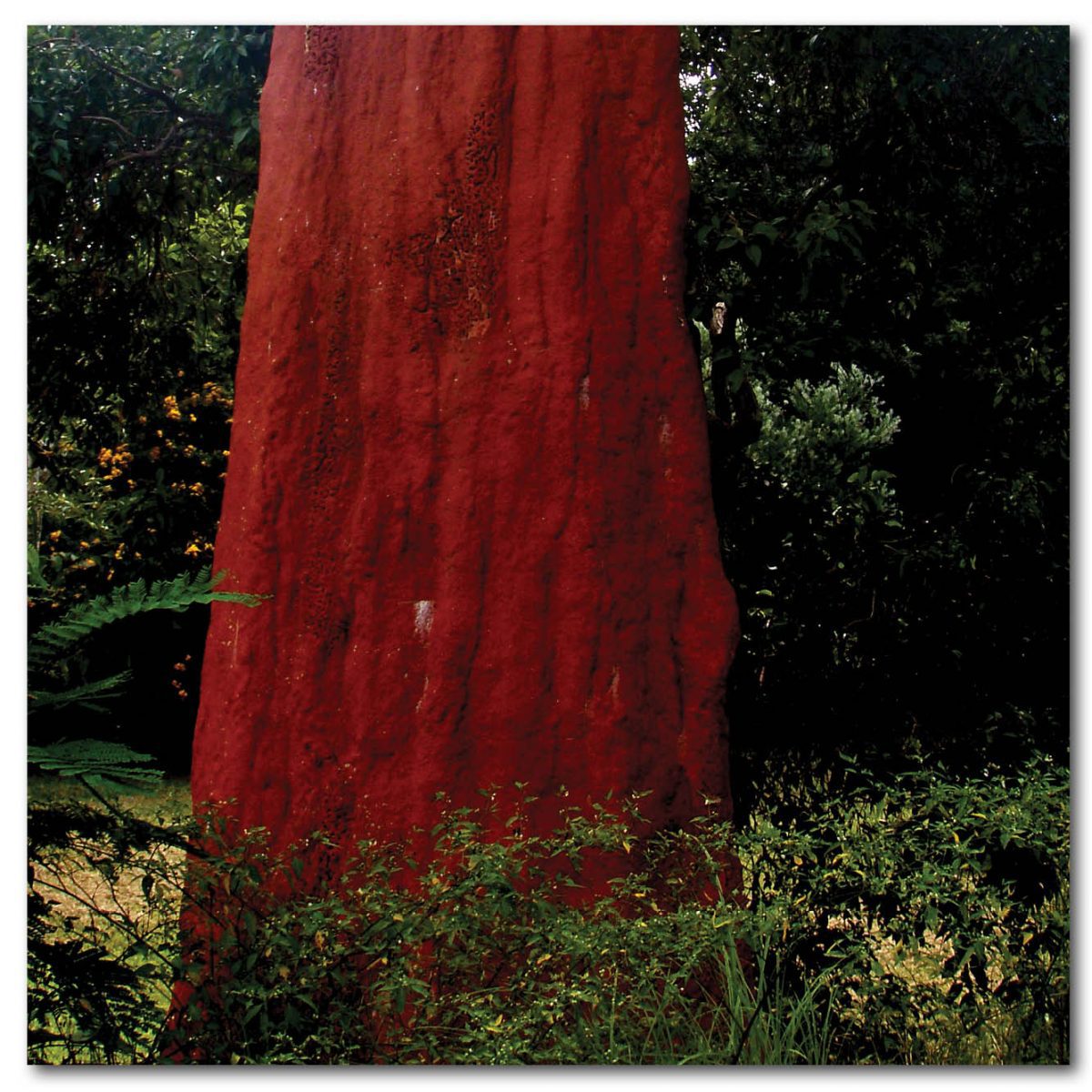
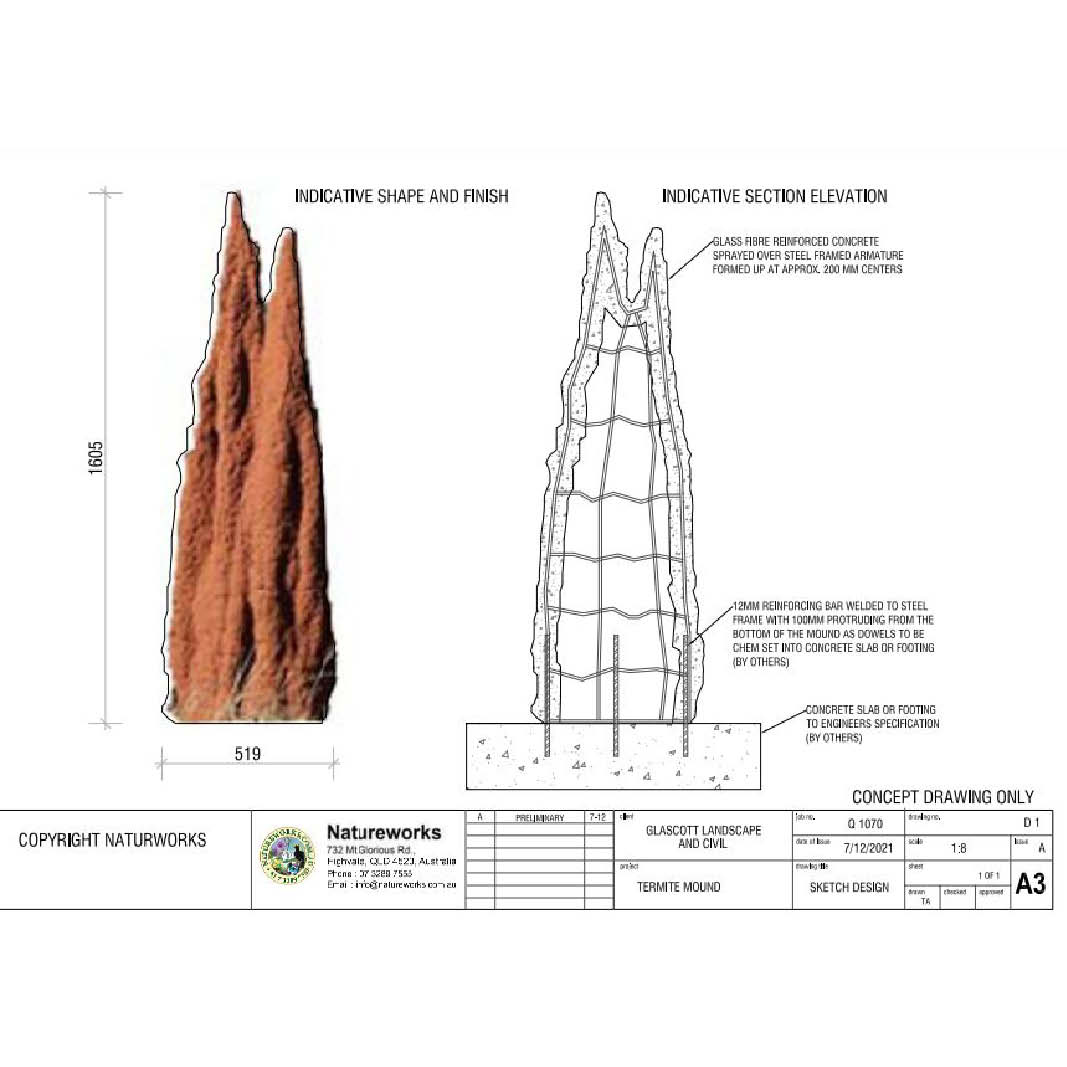
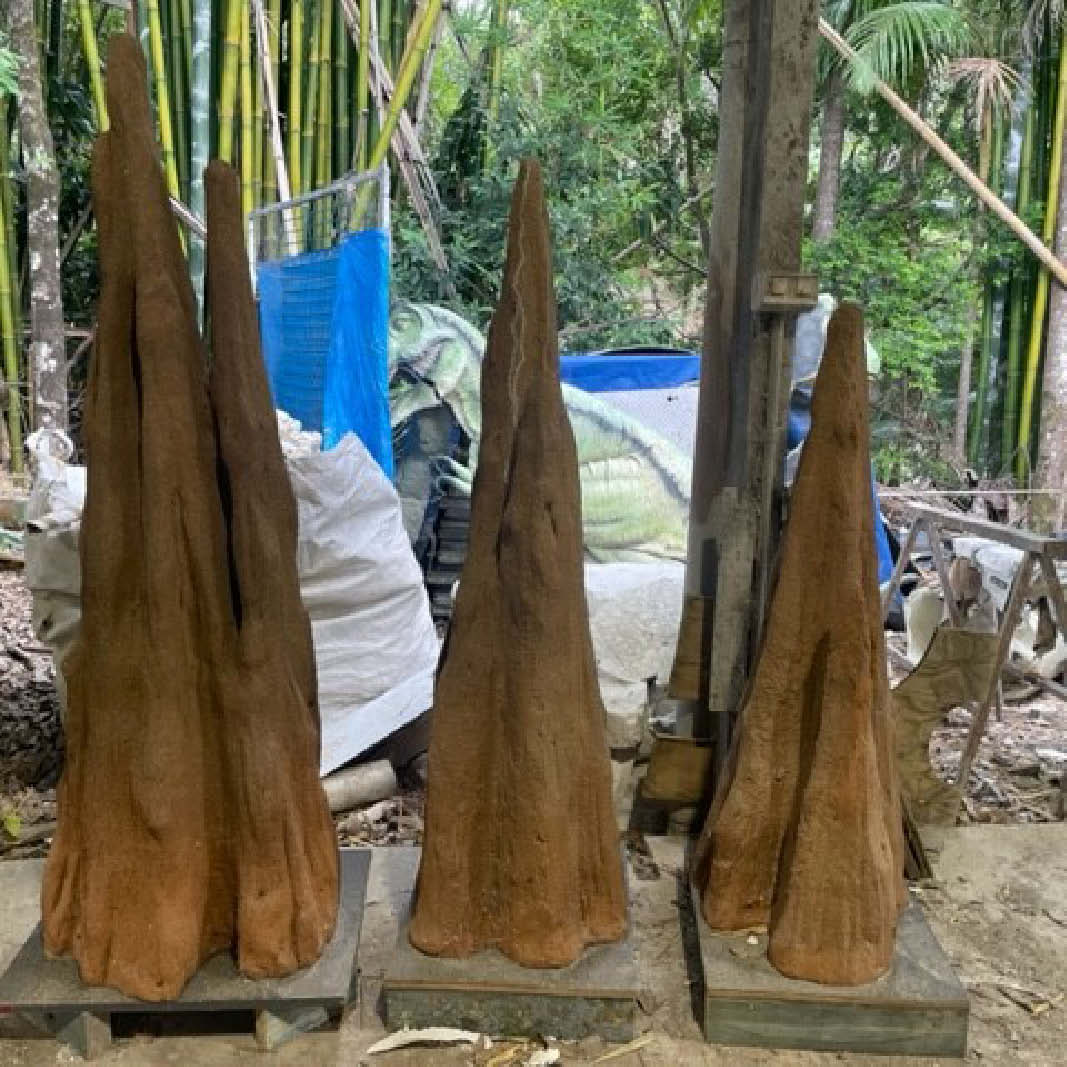
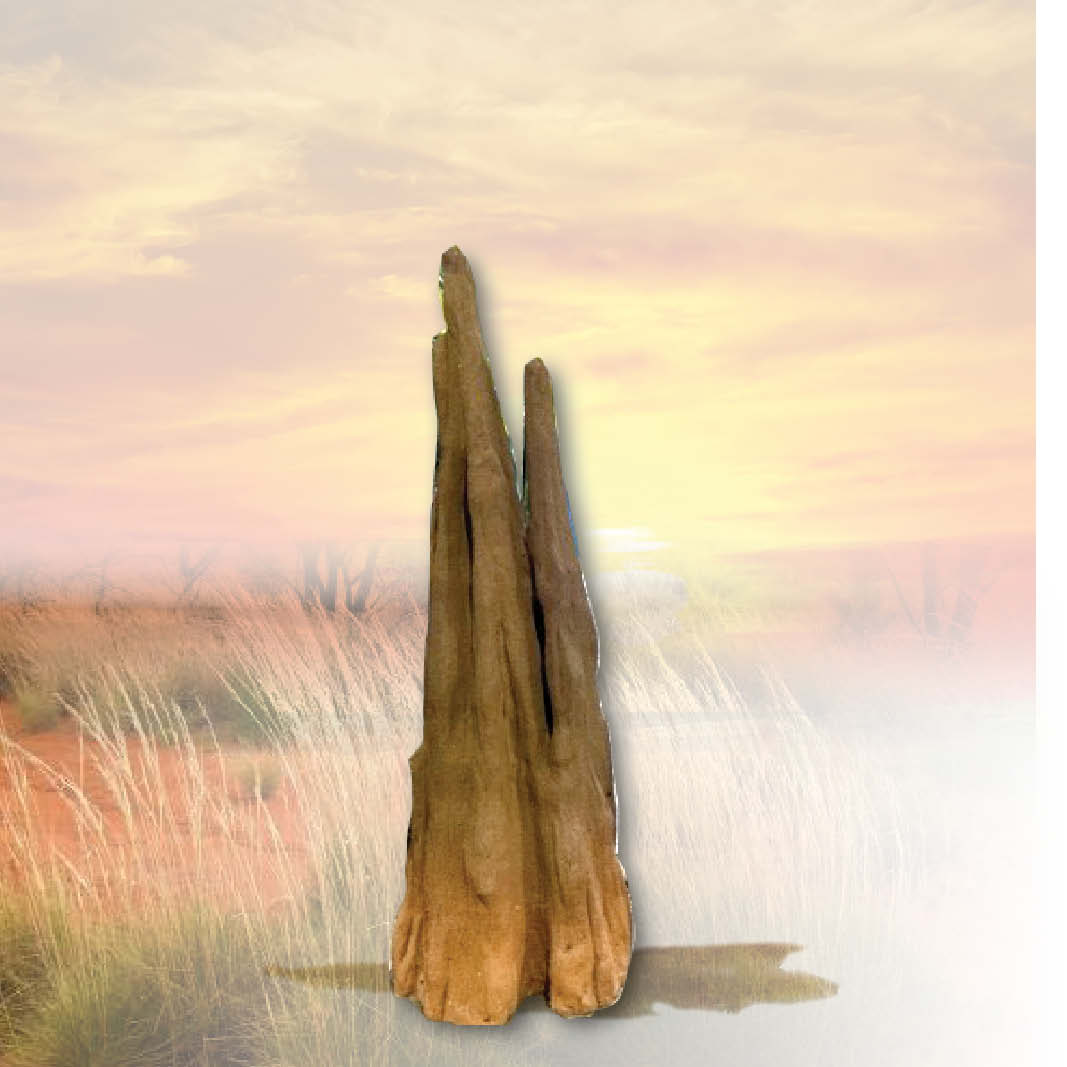
Visually, termite mounds resemble natural rock pillars, although they are not rocks. Artificial replicas of termite mounds are used in landscaping and exhibits to mimic these natural structures.
Built by certain species of termites, these large, above-ground structures serve as shelters and colonies for termites. The mound regulates temperature and protects the colony. Termites construct mounds using materials like soil, mud, wood fibres, and saliva. The termites combine these materials into a dense, cement-like structure. Over time, the termite mounds harden, becoming highly durable and resistant to weathering. Some termite mounds stand for decades!
These replica termite mound structures are ideal for:
| Weight | 20 kg |
|---|---|
| Dimensions | 51 × 54 × 160 cm |

Share this link via
While termite mounds are not rocks, they can resemble rock formations due to their towering shapes, earthy colours, and textured surfaces. Their durable, cement-like appearance makes them visually comparable to natural rock pillars or formations. Artificial replicas of termite mounds mimic these natural structures while blending seamlessly with rock-like features.
The Northern Territory is famous for its towering termite mounds, particularly the magnetic termite mounds near Litchfield National Park – Northern Territory, Queensland, Australia.
Termite mounds are artificial designer rocks, crafted with the finest of detail. They are made lightweight, sturdy, durable and capable of structural support. We can mix and match synthetic and natural rock to create the ultimate rockscape.
Artificial termite mounds can include interpretive signage or embedded displays explaining the ecology of termites and their role in the environment.
Sizes Available
Artificial termite mounds can include interpretive signage or embedded displays explaining the ecology of termites and their role in the environment.
Natureworks has also completed a reproduction of an internal termite mound, showcasing the termite colony. A clear perspex covering can be added to the front display to help fully encase it inside to make it dust-free, offering an engaging learning experience for children and visitors.
Textures, Colours & Sizes
FREE-FORM POSITIVE CARVED ROCKWORK – Quality Detailed finish
Free-form cement rockwork is the method of hand carving wet concrete to replicate the look of natural rock. High quality freeform sculpture requires a combination of passion for the art of rock carving and sheer talent. At Natureworks we take pride in the knowledge that our rockwork looks and feels like the real thing.
To gain the look of natural rock Natureworks uses “Glass fibre reinforced Cement (GFRC). Cast from moulds taken from natural rock. This produces a robust and resilient material and looks and feels real. The material is cast into moulds or can be hand carved to created a realistic natural rock face.
Did you know?
Termite mounds are predominantly found in tropical and subtropical regions, such as Australia, Africa, South America and Asia.
Cultural significance
Termite mounds are a reminder of the symbiotic relationship between termites, soil, and vegetation. Indigenous Australians have long understood and respected this connection, recognizing termites’ role in aerating soil and recycling nutrients.
Some Indigenous Australian Dreamtime stories feature termite mounds as creations of ancestral beings or as homes for spirits.
For example, in certain regions, termite mounds are thought to house the spirits of ancestors or serve as portals to the spirit world. They are often treated with respect and reverence in these cultural contexts
The photos show a 7-metre-high termite mound created for a public display at “The Rocks” in Sydney – New South Wales Australia. Custom size termite mound sculptures are available on request.